
 Key Takeaways
- Macro Scale: Managing a 20-person interpreter team working in a three-shift system for 9 months.
- 360° Logistics: Coordinating accommodation, transport, and facilities for nearly 200 people across 3 locations.
- High-Tech: Interpreting processes for multiple engine types and modern machining and assembly technologies.
- Result: Over 12,000 man-hours of consecutive interpreting delivered directly on the assembly line.
- Beyond Translation: Evolution of the role from technical interpreter to project manager and 'troubleshooter' for crisis situations.
The Calm Before the Storm: Recruitment and Kick-off
The cooperation with a German automotive group began in the spring of 2018 in Lower Silesia – at the command center of the project for a new combustion engine plant, where I was invited to a pre-project meeting.
The assumptions seemed simple: a dozen or so production staff members would go to the German plant to learn the secrets of the assembly line. The group, consisting of foremen and team leaders, needed the support of two interpreters for less than two months. It sounded like a standard job, a walk in the park.
Reality initially confirmed this scenario. The start was intimate – the entire team fit into three vans. We worked one shift, and I, shoulder to shoulder with the employees, learned the engine construction and assembly line logic from scratch. No one suspected then how much this project would evolve.
Operational Context: The Heart of Engine Production Beats in Thuringia
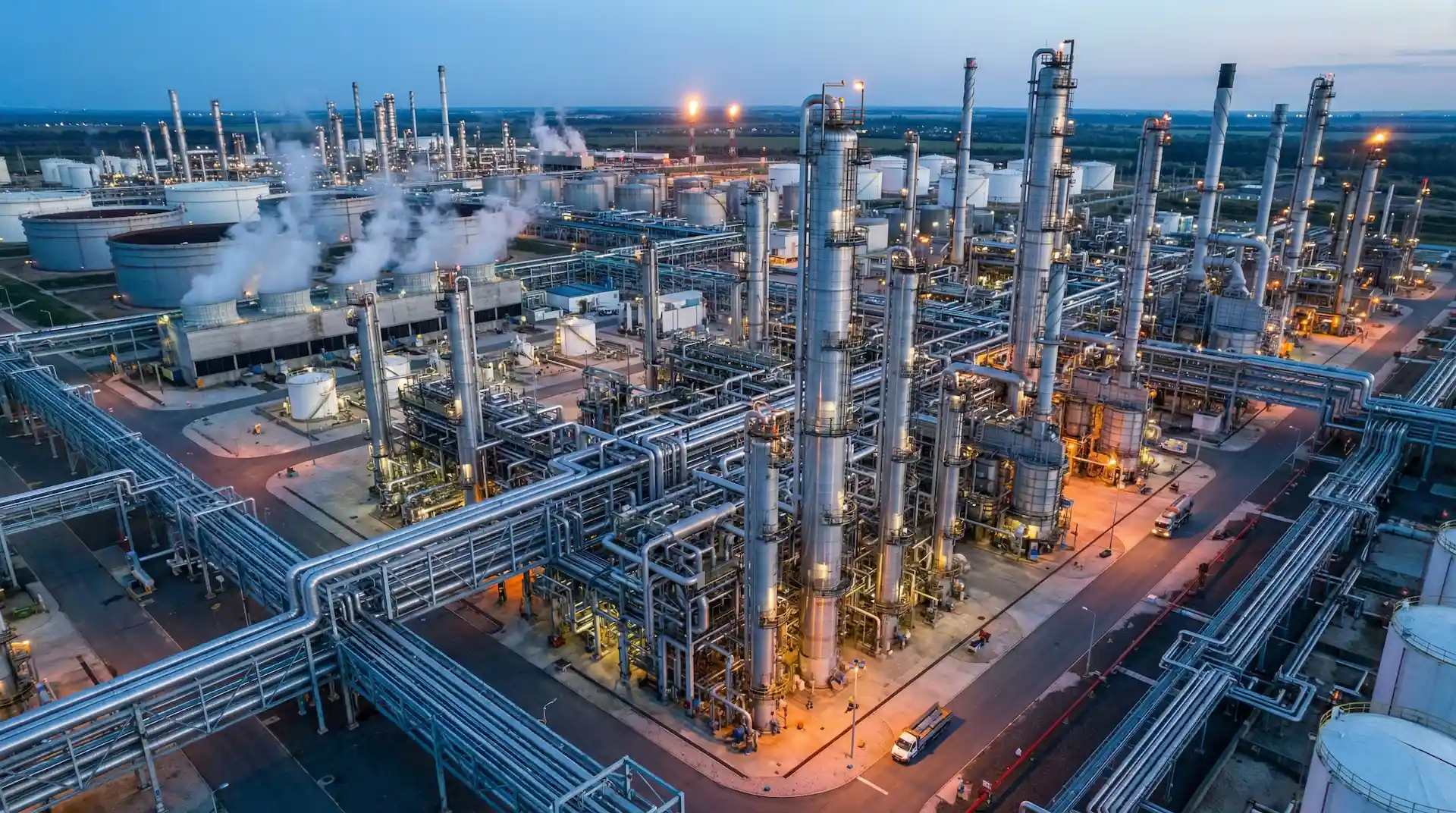
The project was carried out at the plant of an engine manufacturer in Thuringia – a key engine factory wholly owned by a German automotive group. It is a massive production complex with an area of 287,000 m², of which 162,000 m² is production space.
The plant, employing nearly 1,900 people, specializes in assembling powertrains that go into a wide range of models. They form the heart of premium passenger cars, SUVs and vans.
It was in this setting that the training of the core team for the newly opened factory in Lower Silesia took place. Here, we walked thousands of steps every day, circling from station to station to ensure smooth and error-free communication.
Full Throttle: From Pilot to Full-Scale Operation
The first phase of the project was an exciting warm-up. We got to know the production line inside out – both automated and manual stations – mentally dismantling the engine into its prime factors. These few weeks allowed for something more than just knowledge transfer: we built lasting relationships with both the Lower Silesian team and our German hosts.
Therefore, we received the news about the continuation and expansion of the project with enthusiasm. However, no one expected the pace at which the escalation would occur.
The assignment grew from month to month. The Thuringian plant quickly became the main training hub for hundreds of new employees from Poland. Along with them, the demand for language support grew. My role evolved – from an interpreter, I became a coordinator. At the peak, I managed a team of over 20 interpreters rotating in a three-shift system to ensure 24-hour training continuity.
Despite new management tasks, I did not leave the front line. I remained the lead interpreter – both in the noise of the production hall and outside the plant. With the growing number of group members, the spectrum of my duties expanded to handle emergencies. Doctor visits, dental emergencies, or assistance during hospital stays became everyday life. My commitment even extended to logistics and... construction, when it became necessary to organize the building of a kitchen and dining room in one of the hotels accommodating guests from Poland.
At some point, the burden of organizational tasks became so heavy that for the last six weeks of the project, my team was reinforced by an additional coordinator. He took the helm in logistical matters – from managing accommodation and transport to servicing apartment equipment – which allowed me to withdraw from active project participation and head for a well-deserved rest.
Technological Deep Dive: What's Under the Hood?
The project in Thuringia was not just about assembling screws – this is where the heart of modern engine technology beats. During interpreting, we had to master technologies that define modern automotive engineering:
- Precision machining and assembly: Interpreting process parameters for machining engine blocks and cylinder heads and for engine assembly – all under uncompromising quality standards (Zero Defect) with simply no margin for error.
- Seven Hearts in One Body: A logistical challenge was the parallel conduct of training for as many as 7 different engine series. We had to fluidly switch between the terminology for diesel engines and the specifics of gasoline units.
Project Balance: 12,000 Hours and... One Transmission
When I look back at this project, the numbers still impress me. At its peak, the operation covered logistics for nearly 200 people located in three locations within a 30 km radius of the plant.
Together with a team of 20 interpreters working in a three-shift mode, we delivered over 12,000 man-hours of consecutive interpreting. We trained hundreds of production employees, transferring the knowledge necessary to launch the new factory in Lower Silesia.
For me personally, it was the biggest lesson in humility and crisis management of my career. I emerged with "pro-level" knowledge of engine construction, but also with personal costs – the intense commuting between home and work ultimately destroyed the transmission in my company car. But it was worth it.
The success of this undertaking would not have been possible without the fantastic people I had the honor of working with on the line. A huge thank you to the entire "Dream Team":
Anna, Bożena, Violetta, Sandra, Marta, Barbara, Julianna, Marcin, Krzychu, Jakub, Atanazy, Piotr, Darek, Michał, Maciej, Seweryn, Kajetan, Aleksander, Krzysztof, Michu.
This was your achievement!
Verified references